Should you try Instagram photos in comments?
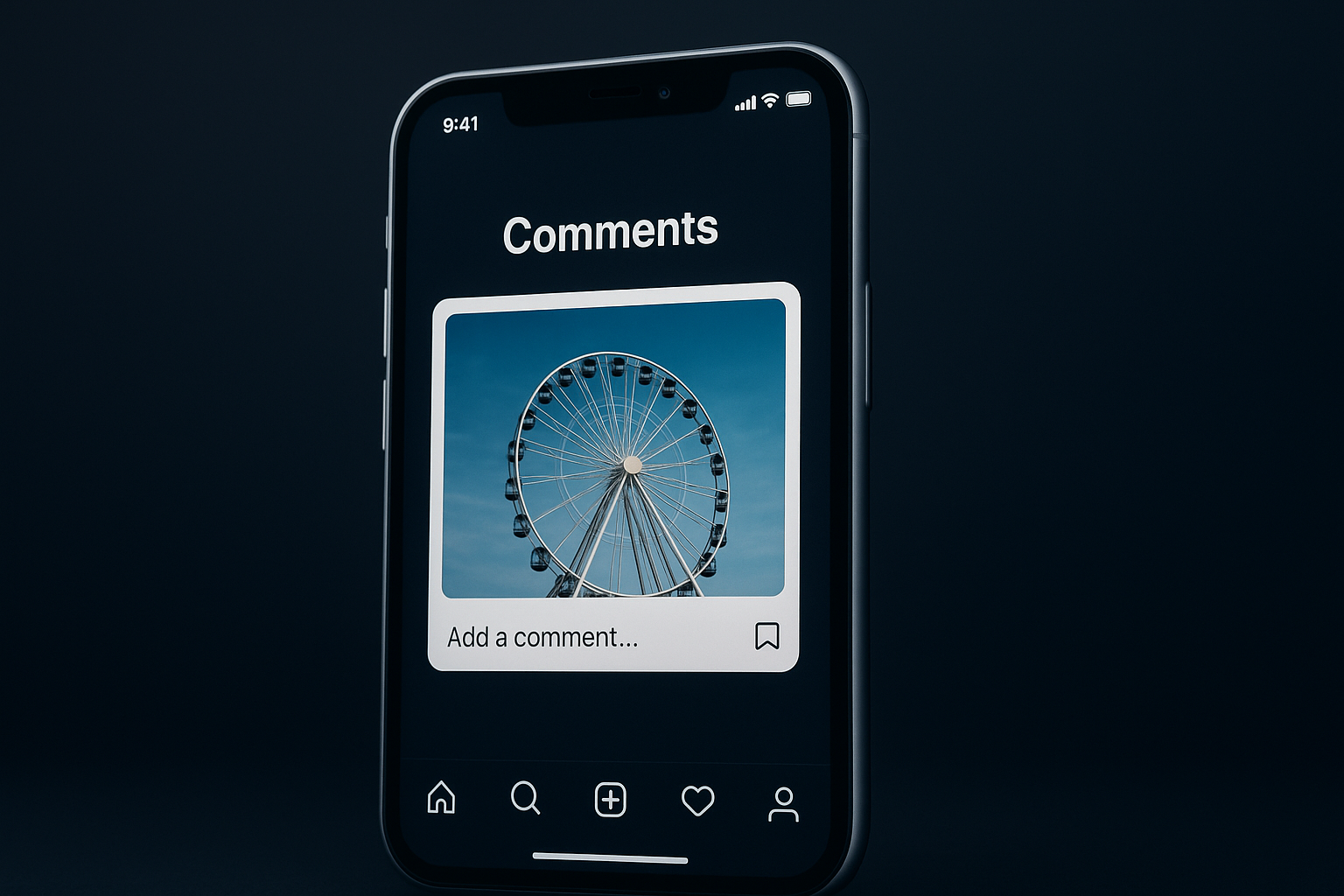
A comment section used to mean rows of text - emojis, tags, short reactions. That's changing. On certain posts, you'll now find actual photographs sitting beneath the caption, submitted not by the original poster but by whoever left the comment. It looks small on the surface, yet it changes how a post feels: less like a broadcast, more like a shared board where anyone can add visual proof, a reaction shot, or their own version of what's being discussed.
This shift toward instagram photos in comments has moved from a curiosity into a feature people actively test for engagement, storytelling, and community building. Some accounts treat it as a standalone experiment; others combine it with broader growth efforts, since a lively comment section tends to matter more when the audience behind it is already substantial - which is one reason accounts looking to boost instagram visibility often pair follower growth strategies with more interactive comment formats rather than relying on either tactic alone.
Deciding whether this feature belongs in your own strategy requires more than curiosity, though. It means understanding how it technically works, what it's good for, where it can go wrong, and how it compares to the plain-text commenting most people are used to. The sections ahead walk through all of that, plus the most recent shifts in how the feature is being used, so you can decide with clarity rather than guesswork.
What Is Instagram Photos in Comments? Understanding the Basics
At its core, this feature allows commenters - not just the original poster - to attach an image directly inside their comment rather than limiting themselves to text or emojis. Someone commenting on a product post can now show, for example, how the item looks once it arrived, instead of describing it in words. The photo sits inline with the comment, visible to anyone scrolling through the thread.
This differs meaningfully from older habits like posting a separate photo and tagging the original account, or sending a photo through direct message. With photo comments, everything stays inside the original post's conversation. Nothing gets buried in someone's inbox, and nothing requires a second post competing for attention on a separate feed.
- Available to regular commenters, not exclusively to the account owner.
- Photos appear directly in the comment thread, not as a linked or separate post.
- Supported primarily on public posts, with visibility depending on the poster's privacy settings.
- Works across personal, creator, and business accounts, though moderation tools differ slightly by account type.
Picture a small bakery posting a photo of a new cake design. A customer who bought one can reply not with "looks great" but with an actual picture of the cake they received. That single comment carries more weight than five lines of text ever could.
How Instagram Photos in Comments Work: Technical Details
Understanding the mechanics matters before deciding whether to encourage or restrict the feature on your own posts. The process is intentionally simple, which is part of why it has spread so quickly among casual users and brands alike.
Step-by-Step: Posting a Photo Comment
- Open the post where you want to leave a comment.
- Tap the comment field at the bottom of the screen to activate the keyboard.
- Select the camera or gallery icon next to the text field.
- Choose an existing photo from your device or capture a new one on the spot.
- Add optional text alongside the image, then submit the comment.
The image uploads alongside whatever text is written, and both appear together in the thread. There's no separate approval screen beyond the standard upload process, which is part of what makes the feature fast - but also part of what makes moderation a genuine consideration, covered further below.
Common Technical Limitations
- Video clips are not supported in the same comment field - only static images.
- Very large image files may be compressed automatically, sometimes reducing quality.
- Moderation and reporting tools can lag behind the speed at which images are posted, especially on high-traffic accounts.
- Accounts with strict comment filters may block photo comments unintentionally if filters are set too aggressively.
For anyone looking into instagram photos in comments details, the technical side is refreshingly uncomplicated. The friction, if there is any, shows up later - in moderation and strategy, not in the mechanics of posting.
Why Users and Brands Are Trying Photo Comments: Benefits and Use Cases
Once the mechanics are clear, the more interesting question becomes why people bother. The answer usually comes down to trust and visibility. A photo carries proof that text can't replicate - it shows rather than tells.
- Stronger engagement, since visual replies tend to draw more attention than plain-text ones scrolling past them.
- Built-in testimonials, where a customer's photo becomes free, authentic proof of a product or service.
- Easier contest and giveaway participation, letting entrants submit images without leaving the post.
- A stronger sense of community, since visual replies feel more personal than a line of text.
- Additional storytelling material for brands, who can screenshot standout comments for later use elsewhere.
Consider a fitness page asking followers to share progress photos directly in the comments of a workout post. Instead of collecting screenshots from direct messages, the brand gets a public, scrollable gallery of results attached to the original content - proof that lives exactly where new visitors will see it.
This is the practical heart of any instagram photos in comments guide: the feature rewards accounts that already have something worth showing, whether that's a product, a transformation, or a creative challenge worth joining.
Potential Risks and Mistakes to Avoid
None of this comes without friction. Opening a comment section to images means opening it to whatever anyone chooses to upload, and that introduces risk that a plain-text comment section doesn't carry to the same degree.
- Failing to moderate promptly, allowing inappropriate or irrelevant images to sit visible for extended periods.
- Ignoring copyright concerns when reposting or reusing a follower's photo without permission.
- Attracting spam accounts that flood comment sections with unrelated or promotional images.
- Assuming the feature will drive engagement on its own, without any prompt or incentive encouraging people to actually use it.
A brand that opens photo comments during a giveaway without clear rules or active moderation can end up with a comment section that looks chaotic rather than lively - off-topic images, duplicate entries, or content that has nothing to do with the original post. The fix isn't avoiding the feature; it's treating moderation as part of the plan from day one, not an afterthought once something goes wrong.
Comparing Photo Comments to Traditional Text Comments
Neither format is universally better - each suits different goals. The table below breaks down where each one tends to perform best.
| Feature | Text Comments | Photo Comments | Best Use Case |
|---|---|---|---|
| Speed to post | Very fast | Slightly slower, requires image selection | Text for quick reactions, photos for detailed responses |
| Perceived authenticity | Moderate | High, since images act as visual proof | Photos for testimonials and reviews |
| Moderation effort | Lower | Higher, due to visual content risks | Text for high-volume, low-oversight accounts |
| Engagement visibility | Blends into the thread | Stands out visually against text replies | Photos for contests, showcases, and community posts |
The distinction isn't about choosing one format permanently. Most accounts benefit from allowing both and letting the audience decide which format fits their reply.
Latest Updates and Trends in Instagram Photo Comments
The feature hasn't stayed static since its introduction. As more creators and brands experiment with it, patterns have started to emerge in how it gets used across different types of accounts.
- Increased use in giveaways and contests, where photo submissions replace separate entry forms or direct messages.
- Closer integration with shopping-related posts, where customers post unboxing or usage photos directly under product content.
- Growing awareness among creators that visually rich comment sections can extend the life of a post, encouraging repeat visits to check new replies.
- More attention from brands on comment moderation practices, treating the comment section as an extension of their public image rather than an afterthought.
For anyone tracking instagram photos in comments latest developments, the pattern is clear: the feature is shifting from novelty toward a standard tool in engagement strategy, particularly for accounts built around visual products or community participation.
Should You Try It? Decision Guide for Different Users
The right answer depends heavily on account type, audience size, and how much time you can realistically dedicate to moderation. A personal account with a small, familiar following faces very different risks than a business account fielding hundreds of comments daily.
- Audience size - larger audiences require more active moderation to prevent spam or inappropriate content.
- Content type - visually driven accounts (fashion, food, fitness, products) tend to benefit more than text-heavy or purely informational accounts.
- Moderation capacity - accounts without time or tools to monitor comments regularly should proceed cautiously.
- Marketing goals - if testimonials, contests, or community proof matter to your strategy, the feature adds real value.
Enable the feature gradually rather than all at once. Start with a single post - perhaps a contest or a request for customer photos - and watch how the comment section behaves before opening it up account-wide. Set clear expectations in the caption about what kind of images are welcome, and check the thread regularly during the first few days rather than assuming it will manage itself.
Questions and Answers
Can anyone post a photo in the comments, or only the account owner?
Any follower or commenter with access to the post can typically add a photo, not just the account owner. Account privacy settings and comment filters can restrict who is able to comment at all, which indirectly limits who can post images too.
Do photo comments affect how many people see the post?
Comments with images tend to draw more attention while scrolling through a thread, which can encourage longer engagement with the post overall. Whether that translates into broader visibility depends on the platform's general engagement signals rather than the photo format itself.
Is there a way to prevent inappropriate photos from appearing in comments?
Reporting tools allow the account owner or other users to flag inappropriate images for review, and comments can be deleted manually at any time. There's no fully automated filter for image content, so active monitoring remains the most reliable approach.
Can a business legally reuse a customer's photo comment in its own marketing?
Reusing someone's photo without direct permission carries copyright risk, even if it was posted publicly in a comment section. The safest approach is to message the commenter directly and ask for explicit consent before reposting their image elsewhere.
Does this feature work the same way on private accounts?
Photo comments generally follow the same visibility rules as text comments - if only approved followers can see a private account's posts, only they can see and add photo comments as well. There's no separate privacy setting specifically for image-based comments.
What's the easiest way to encourage followers to use photo comments?
Ask directly in the caption, and give people a clear reason to participate, such as a contest entry or a request to show how they used a product. Vague invitations rarely generate results; specific prompts almost always perform better.